Restaurant valet parking in San Jose.
Restaurant valet combines curb management with guest service. The operation needs to fit the reservation curve, delivery traffic, nearby businesses, available parking, and the entrance layout.
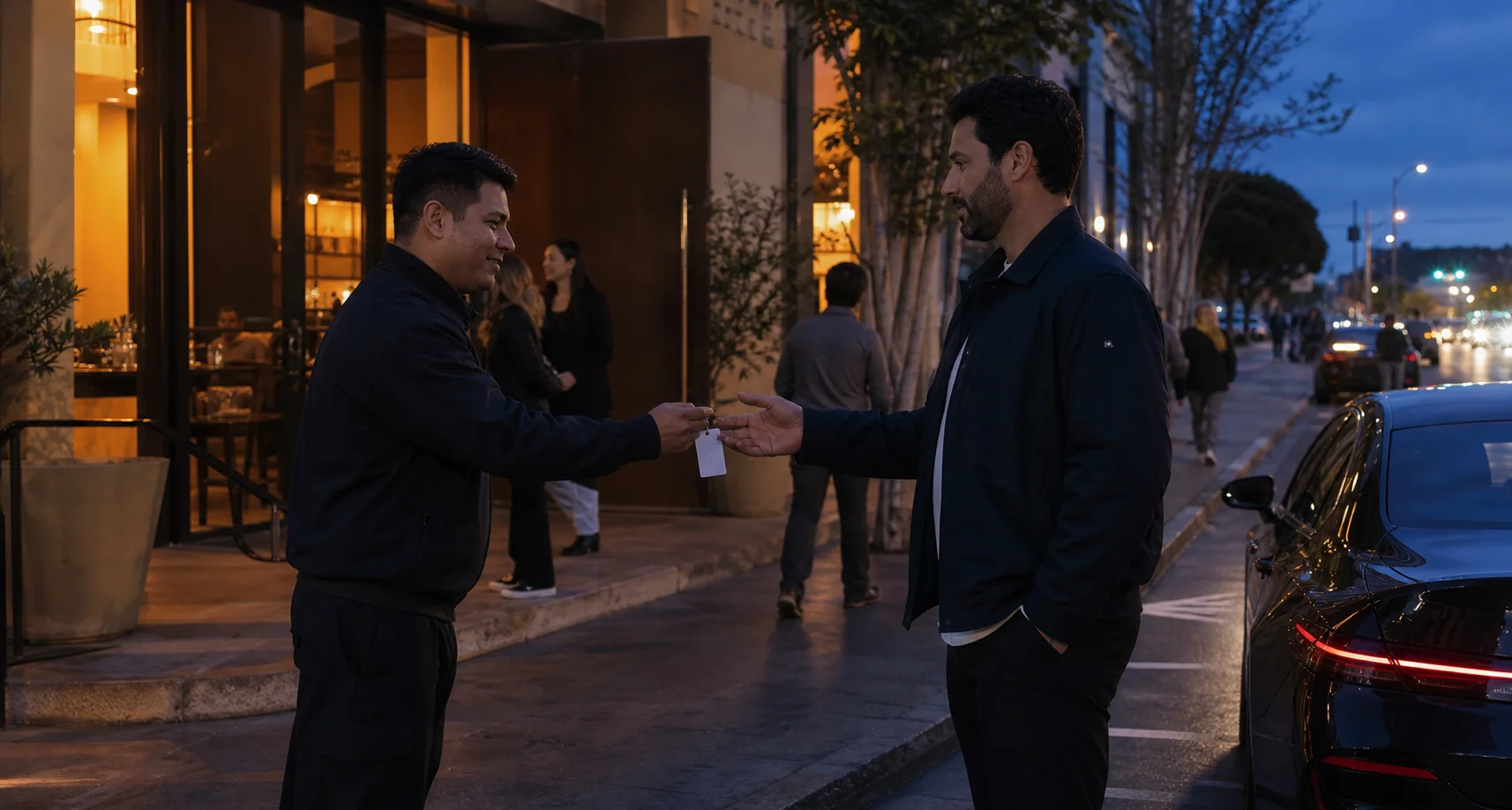
Where restaurant valet parking is used.
- Independent restaurants
- Hotel restaurants
- Private dining events
- High-volume weekend service
- Restaurants with remote parking
Details to confirm before service.
Confirm the route, roles, equipment, access, and guest instructions before the first vehicle arrives.
Reservation schedule
The operating window and crew plan follow the restaurant's real seating pattern, including the second turn and any private dining room events.
Shared curb movements
Valet, rideshare, deliveries, pedestrians, and waiting vehicles each need a place that does not block the others.
Guest handoff
A visible stand, consistent greeting point, and orderly key and vehicle tracking help the service feel like part of the restaurant.
Restaurant valet operating requirements.
A recurring restaurant operation has to work on an ordinary service night, not only during an opening event. The proposal should connect the reservation curve to an approved, dependable parking source and an entrance that can coexist with normal street and property activity. Those details determine the operating hours, crew rhythm, and guest instructions.
Reservations and table turns
Covers alone do not show curb demand. Reservation spacing, walk-ins, private dining, bar traffic, and the second seating indicate when arrivals and retrievals may overlap and when an additional attendant could matter most.
Curb competition by daypart
Dinner service may share the entrance with delivery drivers, rideshare vehicles, neighboring businesses, and waiting guests. A site review during operating hours reveals conflicts that are easy to miss when the street is quiet.
The parking agreement
The proposed lot or garage needs confirmed capacity, access hours, a practical vehicle route, and permission that matches the restaurant schedule. A nearby space is not workable if it closes early or cannot be relied on each service night.
The guest-facing service model
Hosted parking, guest-paid parking, and tipping each require clear language at the door. Signage, ticketing, payment expectations, and the retrieval request process should feel consistent with the restaurant rather than improvised on the curb.
Downtown San Jose, Willow Glen, Santana Row, and nearby South Bay dining areas can have busy sidewalks and limited curb space. Public right-of-way use and property permissions vary by site, so the stand location and vehicle route should be confirmed before launch. Reservation pacing determines when arrivals and retrievals overlap at the curb.
Questions about restaurants.
Browse every FAQCan restaurant valet run only on peak nights?
A plan can be built around the nights and hours when parking demand is highest. The best schedule follows reservation and vehicle data, not habit.
Where are guest vehicles parked?
That depends on the property and nearby parking agreements. The proposed lot, route, walking exposure, capacity, and access hours should all be confirmed in writing.
How does tipping work?
The restaurant can choose a guest-tipped or hosted model. The decision should be clear on signage and in the service proposal so guests are not guessing.
Related services.
Send the address, date, hours, and expected vehicles.
Add any known lot, garage, curb, or property access details.